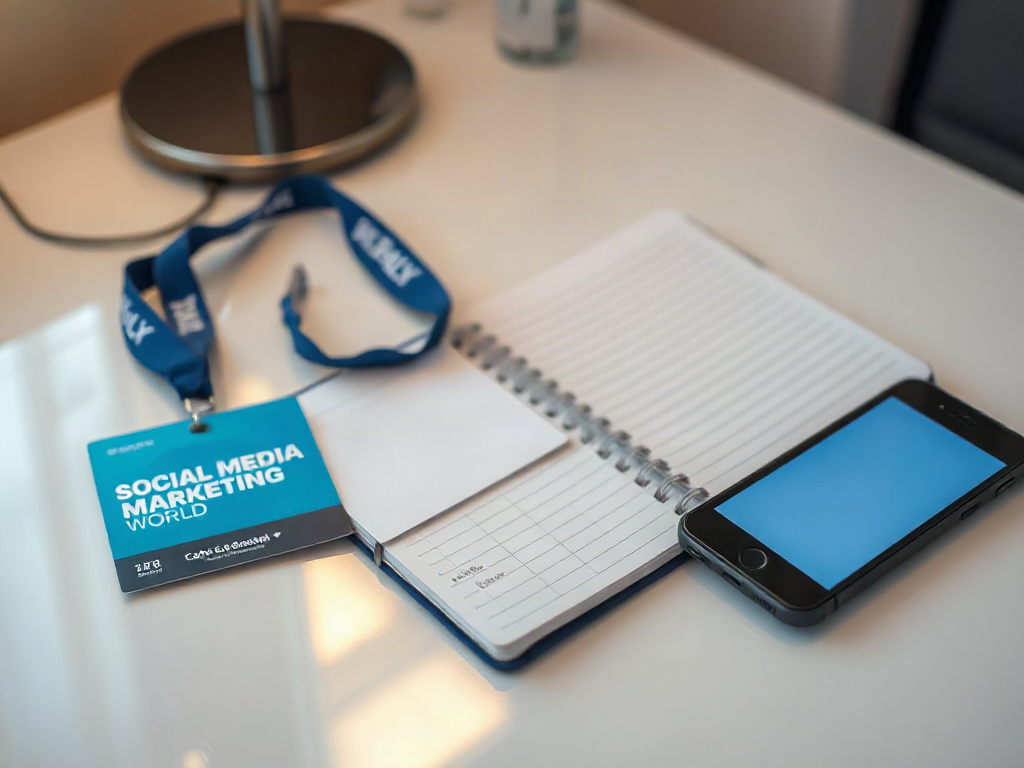
Professional Development Ideas for Social Media Week

Professional development ideas for Social Media Week include focused workshops, content critiques, analytics practice, and peer discussions that turn conference learning or a team learning week into better social media work. Choose one skill gap, such as weak video openings or unclear campaign reporting, and bring a real post or report to work on. Pair each session with a small output: a revised caption, an accessible video draft, a response template, or a test plan with a defined success measure. Protect time for practice and a follow-up review, rather than judging the week by session attendance or expecting a few posts to prove business impact.
What you’ll learn
This guide covers the following practical points:
- Choose Sessions Around a Social Media Skill Gap — A useful session addresses a problem already visible in your publishing queue, audience comments, or reports.
- Turn Social Media Sessions Into Practice — Hands-on activities give session notes a practical use before routine publishing takes over again.
- Build a Manageable Learning Week Schedule — A learning schedule needs room for account coverage, practice, and review—not just sessions.
- Check Skill Gains Without Overreading Results — Review the quality of the work before judging audience results.
Choose Sessions Around a Social Media Skill Gap
A useful session addresses a problem already visible in your publishing queue, audience comments, or reports. Before choosing workshops, review a few recent posts and ask where the work gets stuck. Perhaps video drafts need repeated edits, customer questions go unanswered, or monthly reports list numbers without explaining what to change.
If you are attending the Social Media Week event, use its published agenda to find sessions that address that problem. If you are organizing an internal learning week, build activities around your own accounts and available staff time. Neither approach requires filling every available hour.
Match the difficulty to the person doing the work. A newer coordinator may need practice scheduling posts, writing captions, and reading platform reports. An experienced manager may get more from campaign measurement, creative testing, or a discussion about approval delays.
Write one question before each session: “How can we make the opening of our product videos clearer?” is more useful than “What is new in video?” Bring a draft or anonymized report so the answer has somewhere to land. Avoid selecting a session solely because its case study shows large reach; a large production budget or established audience may make its approach hard to apply.
Turn Social Media Sessions Into Practice
Hands-on activities give session notes a practical use before routine publishing takes over again. Choose exercises that produce something your team can review, revise, and eventually use. Keep unfinished work in drafts rather than publishing it simply to complete an assignment.
Run a content critique and accessibility lab
Take one planned short-form video and review its opening, message, on-screen text, and next step. Ask a colleague to watch it without sound and explain what they understood. Then check caption accuracy, text readability, and whether important information appears only in the audio.
Revise the weakest part rather than rebuilding everything. If the offer is unclear, changing the music will not fix it. For static posts, try the same exercise with the image, caption, and alternative text, describing meaningful visual information rather than inserting keywords.
Rehearse difficult community replies
Use fictional comments based on common account situations: a delayed order, a confusing promotion, or a frustrated repeat customer. Draft a public acknowledgment, decide when a private conversation is appropriate, and identify who handles questions the social team cannot resolve.
Compare responses for clarity and usefulness, not just friendliness. A warm reply that promises an outcome the team cannot deliver creates more trouble. Avoid placing real customer details in workshop documents, and agree on which situations need a manager’s review.
Hold a focused peer exchange
Bring one draft and one decision to a small peer discussion. For example, ask whether a demonstration should open with the finished result or the first step. Request reasoning tied to the audience, not a vote on personal taste.
At an event, this makes networking less awkward: you have a specific question to discuss. Ask permission before sharing someone’s materials or recording their comments. Leave with one approach worth testing, rather than a collection of borrowed ideas with no clear purpose.
Build a Manageable Learning Week Schedule
A learning schedule needs room for account coverage, practice, and review—not just sessions. Someone still has to monitor comments and publish approved content. Agree on coverage before blocking calendars so development time does not quietly become evening work.
Illustrative four-hour schedule: This internal plan totals 240 minutes across five days. It assumes short sessions or selected recordings and excludes conference travel, full-length event programming, and normal publishing duties.
| Day | Time | Learning activity | Work produced |
|---|---|---|---|
| Monday | 30 minutes | Review recent posts and choose a skill gap | One learning question and baseline example |
| Tuesday | 60 minutes | Watch a relevant session and revise a draft | Before-and-after creative |
| Wednesday | 60 minutes | Practice interpreting an account report | One supported finding and proposed action |
| Thursday | 45 minutes | Rehearse community replies or request peer feedback | Reviewed responses or revision notes |
| Friday | 45 minutes | Share the work and prepare a small test | Test owner, review date, and success measure |
For an overloaded team, choose one workshop and one review instead of squeezing every activity into shorter blocks. Protecting enough time to finish a caption rewrite is more valuable than briefly sampling several unrelated topics. Live events may offer valuable conversations, but recordings can make it easier to pause and practice when schedules are tight.
Check Skill Gains Without Overreading Results
Review the quality of the work before judging audience results. A revised video can have clearer captions and a stronger opening even when its first published version receives modest reach. Early evidence of learning includes fewer factual corrections, more useful reporting notes, or replies that correctly identify the next service step.
An analytics clinic should check the calculation as well as the conclusion. Using illustrative numbers, 18 link clicks from 900 impressions gives a 2% impression-based click-through rate: 18 ÷ 900 × 100. Confirm that the report actually uses those inputs; a rate based on reach has a different denominator. Neither figure tells you how many visitors became customers.
For a creative test, change one main element where practical, such as the video opening. Record the hypothesis, format, audience, paid support, and review date. Compare reasonably similar posts, while recognizing that timing and distribution still vary. One unusually successful post is a reason to investigate, not proof that the workshop caused the result.
Use this compact review checklist:
- Work quality: What improved between the original and revised draft?
- Application: Has the new approach been used in normal publishing?
- Audience response: Does the chosen metric match the post’s purpose?
- Next decision: Should the team repeat, adjust, or stop the test?
If notes keep accumulating but drafts and decisions remain unchanged, reduce the number of learning topics. The missing piece may be editing time or approval access, not another session.
Frequently Asked Questions
Do you need to attend a conference to organize a social media learning week?
No. You can organize an internal week using selected lessons, account reports, draft content, and peer feedback. Conference attendance offers different opportunities, but practical exercises do not require travel or an event pass.
How can a solo social media manager take part without falling behind?
Reserve one realistic learning block and use an existing assignment as the practice material. Revise a post already in the queue or improve a report already due. Avoid creating an extra campaign just to demonstrate participation.
What should a professional development budget request include?
Name the skill gap, relevant session or activity, total cost, time away from account duties, and planned work product. Include how account coverage will work and when you will share the lesson. Do not promise sales gains you cannot reasonably attribute.
What should beginners prioritize during Social Media Week?
Prioritize the tasks you will perform immediately: drafting clear posts, checking accessibility, scheduling accurately, handling routine comments, and interpreting basic reports. Advanced campaign topics are harder to apply when those daily tasks still need close supervision.
What professional development activity works well for a remote team?
Share an approved draft and ask each teammate to leave comments against the same brief before a short review call. Discuss the reasons behind suggested edits, then assign one person to revise it. Use anonymized materials and the team’s approved workspace.
Conclusion
Give the week a clear finish line: one recurring social media problem addressed, one piece of work improved, and one sensible test ready to run. Choose sessions around that work, arrange account coverage, and leave room for feedback. Before the week ends, assign a review date and an owner. That makes professional development part of the publishing process instead of another folder of notes nobody has time to use.
Use your platform’s official help center to confirm reporting definitions and publishing features before a practice session. For follow-up learning, consult Meta Blueprint or LinkedIn Marketing Labs and select material relevant to the accounts you manage. Check the platform, topic, and update information before applying a lesson to an active campaign.