Marketing Collateral That Supports a Small Business Website: Examples in Sevierville, TN
At a Glance
A brochure handed out at a local event has a different job from a service sheet sent after a quote request. The first needs to earn a visit; the second needs to make comparison and follow-up easier. Treating both as miniature copies of the homepage gives customers little reason to open the site.
What you’ll learn
- Choose Collateral Around Customer Decisions: A brochure handed out at a local event has a different job from a service sheet sent after a quote request. The first needs to earn a visit; the second needs to make comparison and follow-up easier. Treating…
- Connect Printed Materials to Useful Website Pages: Printed collateral should send readers to the page that continues the conversation they are already having. A general homepage may be appropriate for a business card, but a service-specific handout usually needs a more focused destination.
- Reuse Website Content Without Creating Conflicting Versions: Collateral and website pages should share the same facts, but they do not need identical amounts of detail. The printed piece should help someone recognize a fit; the website can carry fuller explanations, galleries, and answers that change…
Exploring “Marketing Collateral That Supports a Small Business Website: Examples” in Sevierville, TN? Use this guide to understand the key considerations and prepare your questions.
Local help with your next step
Mainline Marketing Group, llc offers Conversion improvement in Sevierville. If this guide raises questions about what you need, start a conversation about the available options, timing and pricing.
Service notes: Travel radius supplied by client: 100+ miles.
Cross-state service: Yes.
Choose Collateral Around Customer Decisions
A brochure handed out at a local event has a different job from a service sheet sent after a quote request. The first needs to earn a visit; the second needs to make comparison and follow-up easier. Treating both as miniature copies of the homepage gives customers little reason to open the site.
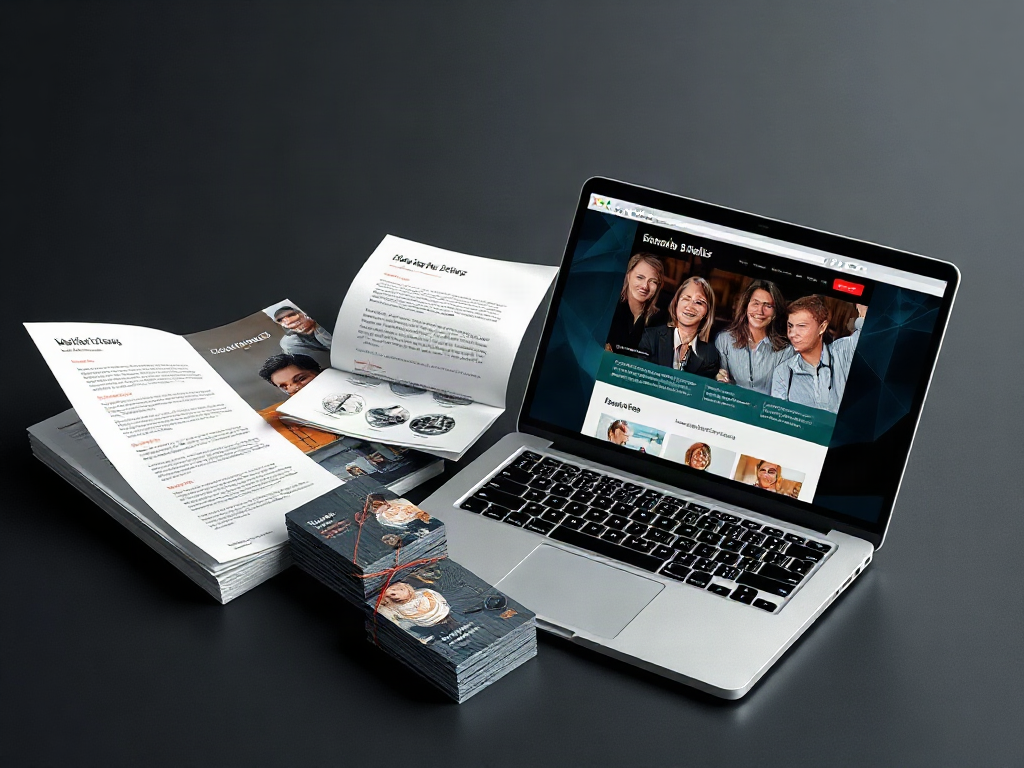
Marketing collateral includes print and digital materials people can read, save, forward, or discuss while considering a business. Unlike an ad, which usually earns initial attention, collateral often needs to answer questions after that attention has been won. Choose the format around the question a customer still needs answered.
| Collateral | Customer question | Useful website destination |
|---|---|---|
| Business card or event handout | Does this business handle what I need? | Relevant service or location page |
| Service sheet | What is included, and what happens next? | Detailed service page with an inquiry option |
| Case study | Has this business handled a similar project? | Full project story with supporting images |
| Brochure | Which offering fits my situation? | Service comparison or category page |
| Follow-up email | What do I need before booking? | Preparation, estimate, or booking page |
For a small budget, a service sheet is often a better first investment than a multipage brochure. Staff can email it, bring it to meetings, and include it with estimates. A brochure becomes more useful when customers genuinely need to compare several offerings.
Check the destination page before producing the material. If it lacks the promised details or a usable contact form, fix that gap first. More printed pieces will not resolve an incomplete website.
Connect Printed Materials to Useful Website Pages
Printed collateral should send readers to the page that continues the conversation they are already having. A general homepage may be appropriate for a business card, but a service-specific handout usually needs a more focused destination.
Consider a hypothetical residential painting company leaving an interior-painting sheet after an estimate. The sheet could explain furniture preparation, surface repairs, and what the estimate includes. Its website link should open an interior-painting page with project photos, process details, and a way to request clarification. Sending that reader to a homepage dominated by exterior work creates an unnecessary detour.
Give the link a specific purpose. “See interior project photos and request an estimate” tells readers what they will find; “Visit our website” does not. Use one main action so a small handout does not become a crowded menu of competing links.
Place a readable web address beside the QR code. Some readers will type it later, and others may be viewing a photograph of the handout on the same phone they would otherwise use to scan it. A short address on a domain the business controls also makes future updates easier. It can redirect to a replacement page without changing the printed address.
Before approving the print run, scan a physical proof with more than one phone and test the destination on mobile. Check the form, phone link, text size, and page loading. A code that works on a large design preview may be awkward to scan once reduced or placed near a fold.
Reuse Website Content Without Creating Conflicting Versions
Collateral and website pages should share the same facts, but they do not need identical amounts of detail. The printed piece should help someone recognize a fit; the website can carry fuller explanations, galleries, and answers that change over time.
Maintain one approved record of service names, inclusions, service areas, contact details, and any published pricing. Assign someone to update it when the offer changes. Otherwise, an old PDF can keep circulating after the website has been corrected, leaving staff to explain a price or service the business no longer offers.
Put stable information in long-lived print materials. Keep short promotions, changing availability, and detailed price conditions on a maintained page. If readers need price guidance to judge suitability, do not hide it automatically; use accurate scope notes and avoid printing a fixed amount that staff cannot consistently honor.
Proof deserves more space than broad claims. A project sheet can describe the customer’s need, the work delivered, and the documented result. For the painting example, that might mean room photographs, the surfaces included, and how the crew handled preparation. Do not turn an ordinary project into an unsupported claim about savings or customer satisfaction. Obtain permission for customer quotations and identifiable project images.
Keep core service information available as a regular web page, even when offering a PDF. A PDF can be convenient to forward or print, but small text and fixed layouts can be difficult on phones. Give downloadable files descriptive names, selectable text, and contact details that still make sense when the file travels without its original email.
Read the full guide: Marketing Collateral That Supports a Small Business Website: Examples
Compare collateral formats by the decision they support in Sevierville
Illustrative application for this service area; not a report of a completed local project.
For a business in Sevierville, the article provides a decision rule for comparing a service sheet, brochure, follow-up email, or case study: select the format that answers the next customer question. A service sheet could fit when readers need scope and next steps; a brochure could fit only if they must compare several offerings; a follow-up email could fit when preparation before an inquiry is the obstacle. Mainline Marketing Group could apply this comparison to conversion improvement materials by checking whether each option leads to a specific, useful website page. For example, if a proposed brochure merely repeats general homepage language, a focused service sheet may be the better test. Review the destination on mobile and confirm that its form or inquiry path matches the action named in the material before deciding that more pages or printing are necessary.
- Score each proposed format against the customer question it must answer and the website page that will continue the conversation.
- Choose the smallest format that supplies the needed answer, then test its link and inquiry path on a phone.
Local context: Business-supplied service coverage
Ready to take the next step?
Mainline Marketing Group, llc
Mainline Marketing Group offers the client-selected services within the approved service areas listed in this profile.
Whether you are comparing options or ready to get started, tell Mainline Marketing Group, llc what you have in mind. Ask about Conversion improvement, explain what matters to you, and discuss the next step before making a decision.
Local questions
Does Mainline Marketing Group, llc offer Conversion improvement in Sevierville?
Yes. Conversion improvement is listed among the services Mainline Marketing Group, llc offers in Sevierville. Contact the business to confirm availability and any requirements.
How can I get started?
Call 828-536-0055 or use the contact options above. Share what you need, any questions you have and your preferred timing. Ask about options and pricing so you can decide on your next step.
Business-supplied service information
Services and coverage were supplied by Mainline Marketing Group, llc. Contact the business to confirm the scope and availability for your needs.